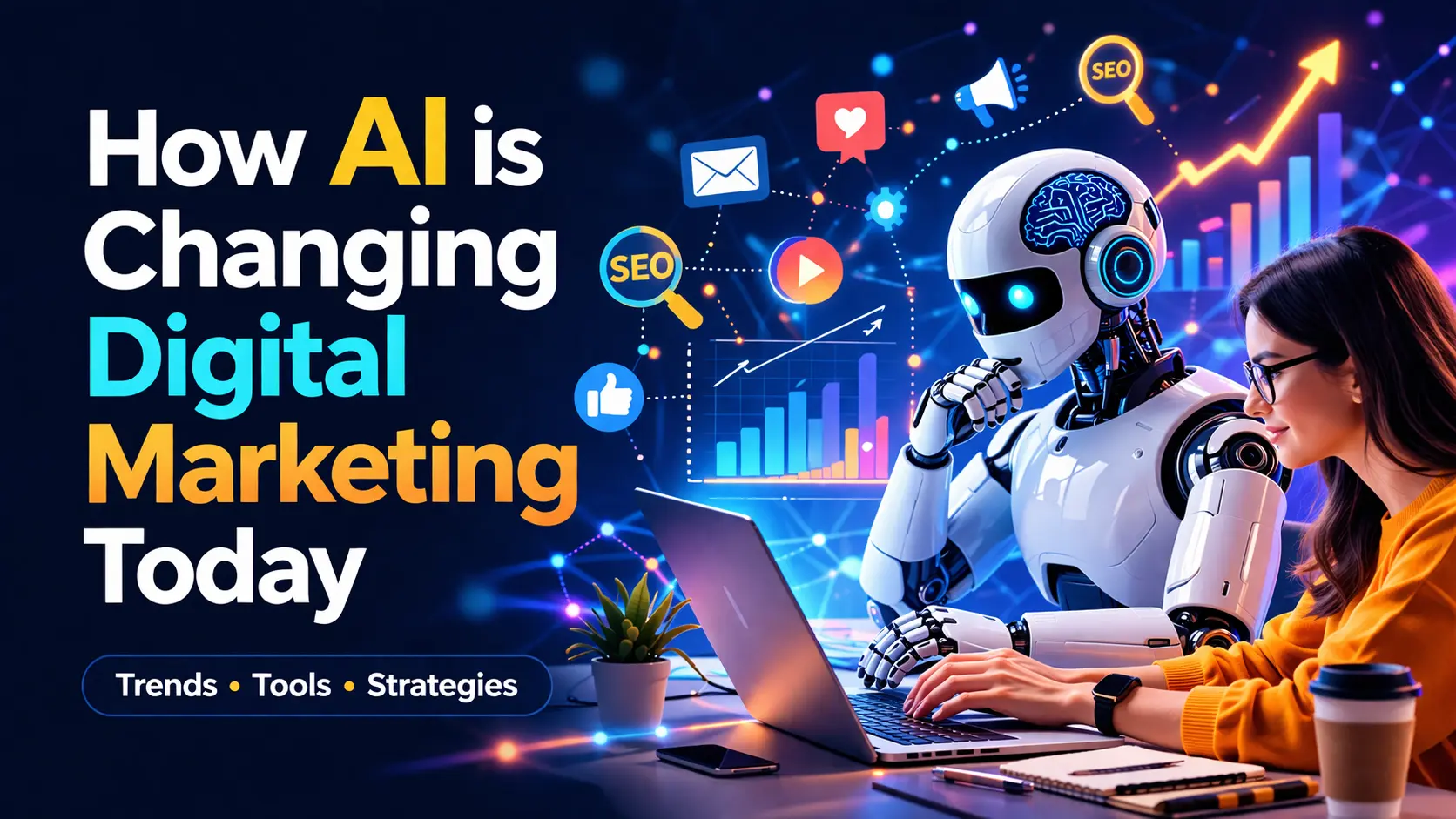
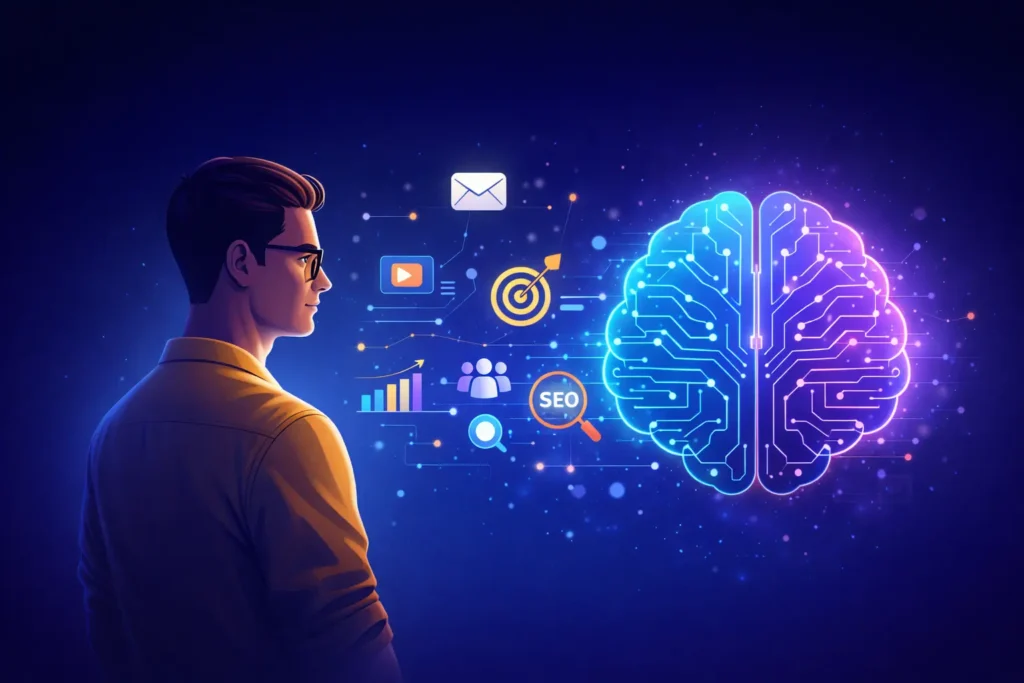
Discover how AI is changing digital marketing today — from personalization and automation to SEO, content creation, chatbots, and analytics. A must-read guide for marketers in 2026.
In today’s fast-moving digital landscape, artificial intelligence (AI) is no longer a futuristic concept — it is the backbone of modern marketing strategy. Brands that understand how AI is changing digital marketing today are gaining a significant competitive edge over those that are still relying on traditional methods.
From hyper-personalized customer experiences to real-time data analytics, AI is transforming every aspect of digital marketing. Whether you are a startup, a mid-sized business, or a global enterprise, understanding the role of AI in digital marketing is no longer optional — it is essential.
This comprehensive guide will walk you through how AI is changing digital marketing today, the tools driving this revolution, the benefits, the challenges, and what the future holds for AI-powered marketing.
Table of Contents
1. What Is AI in Digital Marketing?
Artificial intelligence in digital marketing refers to the use of machine learning algorithms, natural language processing (NLP), big data analytics, and automation technologies to plan, execute, and optimize marketing campaigns.
AI in digital marketing allows brands to analyze vast datasets in real time, predict consumer behavior with high accuracy, deliver personalized content to the right person at the right time, automate repetitive tasks like email scheduling and ad bidding, and generate creative content such as blog posts, social captions, and ad copy.
Simply put, AI acts as a smart marketing assistant that works 24/7, never tires, and continuously learns from new data to improve results.
https://witnexa.com/why-digital-marketing-is-important-for-business/ “digital marketing basics”
2. How AI is Changing Digital Marketing Today — Key Areas
2.1 AI-Powered Content Creation
One of the most visible ways AI is changing digital marketing today is in content creation. AI writing tools like ChatGPT, Jasper, Copy.ai, and Writesonic can generate blog posts, product descriptions, ad copy, email subject lines, and social media captions in seconds.
How it helps marketers: it drastically reduces content production time, allows small teams to scale their content strategy, enables A/B testing of multiple content variations simultaneously, and helps overcome writer’s block with AI-generated outlines and drafts.
The best results come from combining AI efficiency with human creativity. AI handles the structure and research; skilled human writers add tone, nuance, storytelling, and brand voice.
Pro Tip: Use AI to generate first drafts, then edit and humanize the content for authenticity and SEO performance.
“Neil Patel AI marketing guide” — https://neilpatel.com/blog/ai-marketing/
2.2 AI and SEO Optimization
Search engine optimization (SEO) is another domain where AI is making a massive impact. Google’s own AI-powered algorithm — RankBrain — uses machine learning to understand search intent and rank pages accordingly.
For marketers, AI tools are now capable of keyword research (tools like Semrush, Ahrefs, and Surfer SEO use AI to identify high-volume, low-competition keywords), content optimization (AI analyzes top-ranking pages and suggests improvements), technical SEO audits (automated crawling to detect broken links, duplicate content, and page speed issues), voice search optimization (AI helps optimize content for conversational queries), and SERP analysis (AI tracks ranking fluctuations and provides actionable recommendations).
Understanding how AI is changing digital marketing today through SEO means recognizing that keyword stuffing is dead — semantic relevance, search intent, and user experience now reign supreme.
2.3 Personalization at Scale
Traditional marketing tried to reach as many people as possible with the same message. AI flips this model entirely. AI enables hyper-personalization — delivering a unique experience to each individual based on their browsing history, purchase behavior, location and device type, engagement patterns, and demographic profile.
Real-world examples: Netflix uses AI to recommend shows based on viewing history. Amazon uses collaborative filtering to suggest products. Spotify creates personalized playlists like Discover Weekly using machine learning.
For digital marketers, AI personalization means higher email open rates, better conversion rates through personalized landing pages, and increased customer lifetime value through tailored product recommendations.
2.4 AI Chatbots and Customer Engagement
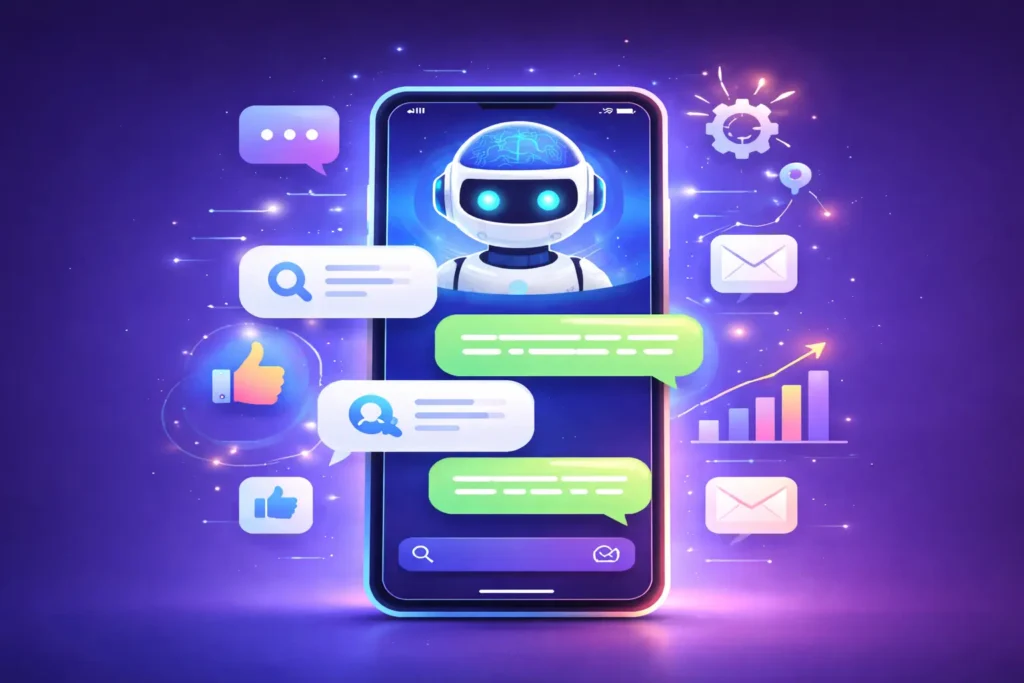
AI-powered chatbots have revolutionized customer service and engagement. Unlike traditional bots, modern AI chatbots understand natural language, learn from interactions, and provide contextually relevant responses.
Key benefits include 24/7 availability (never miss a customer inquiry), lead qualification (chatbots ask targeted questions to qualify leads before human follow-up), personalized product recommendations based on user queries, instant customer support for FAQs and bookings, and data collection through conversation.
Platforms like Drift, Intercom, ManyChat, and Tidio are widely used for AI-powered chat marketing.
2.5 Predictive Analytics and Data Intelligence
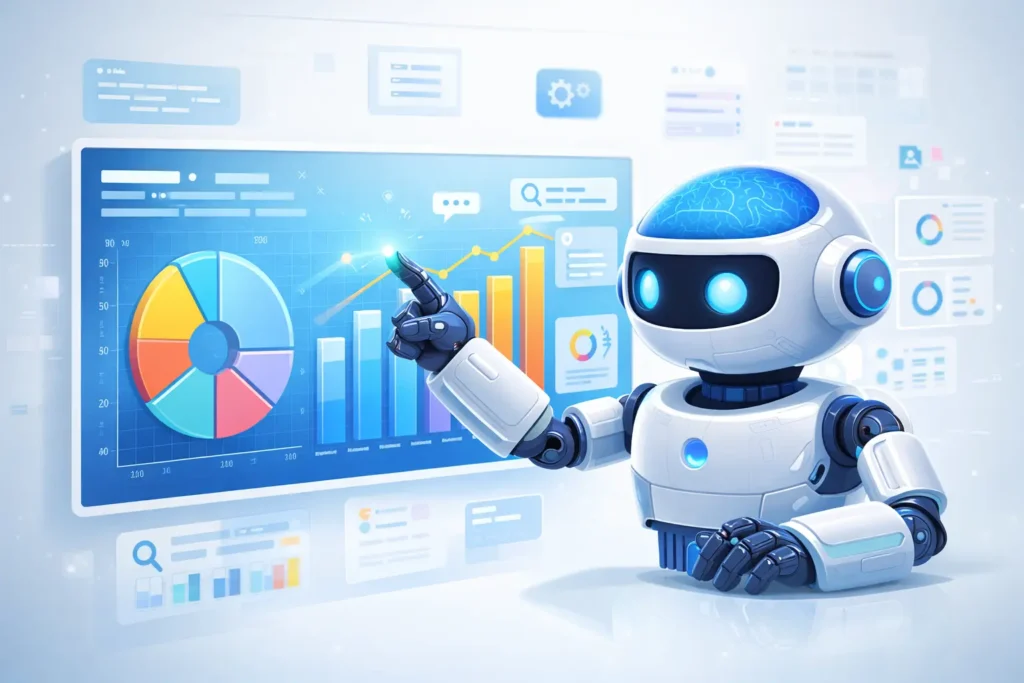
Predictive analytics is one of the most powerful ways AI is changing digital marketing today. By analyzing historical data and current trends, AI can accurately predict which customers are most likely to convert, what products a customer will purchase next, when a customer is at risk of churning, and which marketing channel will deliver the best ROI.
Tools used for predictive analytics in marketing include Google Analytics 4, Salesforce Einstein, HubSpot AI, and Adobe Sensei. With predictive analytics, marketers can shift from reactive decision-making to proactive strategy.
2.6 Programmatic Advertising
Programmatic advertising uses AI to automate the buying and placement of digital ads in real time. Instead of manually negotiating ad placements, AI algorithms analyze user data and automatically bid for the most relevant ad inventory in milliseconds.
Benefits include real-time bidding (RTB) that ensures ads are shown to the most relevant audiences, waste reduction by eliminating irrelevant impressions, dynamic ad creative optimization where AI tests different ad variations and serves the best-performing one, and cross-channel ad management across Google, Facebook, Instagram, YouTube, and more.
2.7 Email Marketing Automation
Email marketing remains one of the highest ROI channels in digital marketing, and AI is making it smarter than ever. AI capabilities in email marketing include send time optimization (AI determines the best time to send emails to each subscriber), subject line testing (AI generates and tests hundreds of subject lines), behavioral triggers (automated emails triggered by specific user actions), list segmentation (AI segments email lists based on behavior and demographics), and churn prevention (AI identifies subscribers likely to unsubscribe and triggers re-engagement campaigns).
Tools like Mailchimp, Klaviyo, ActiveCampaign, and Brevo now incorporate powerful AI features.
2.8 Social Media Marketing with AI
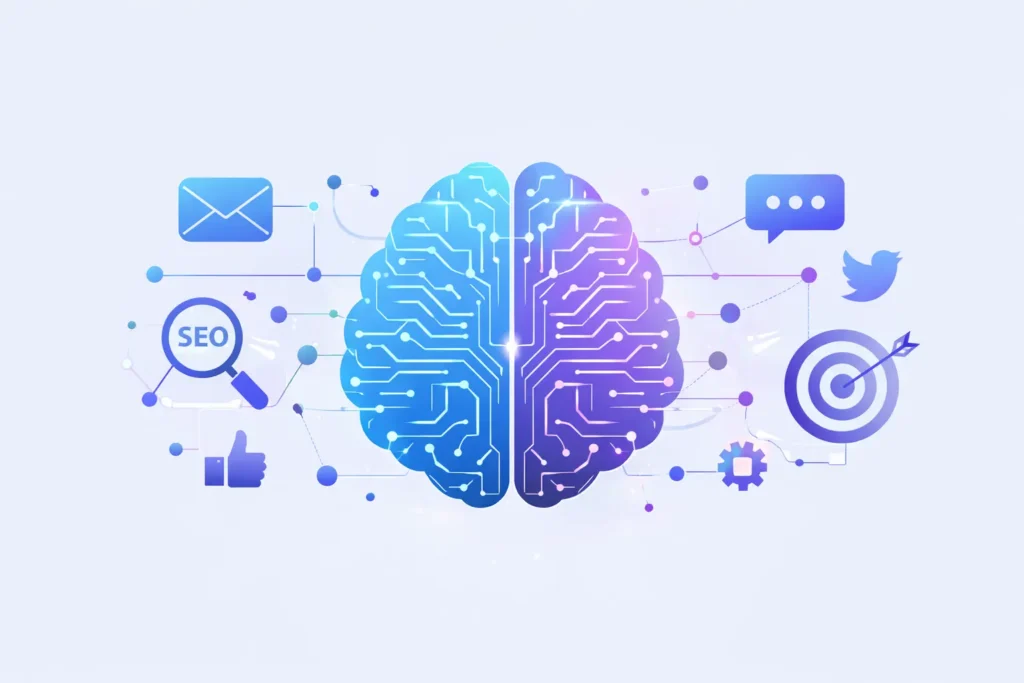
How AI is changing social media marketing: content scheduling and optimization tools like Hootsuite and Buffer use AI to determine the best times to post. Sentiment analysis allows AI to monitor brand mentions. Trend prediction enables AI to identify emerging trends before they go viral. Influencer identification tools analyze influencer audiences for authenticity and engagement rate. Visual recognition allows AI to auto-tag products in images. Ad targeting on Facebook and Instagram uses AI algorithms to continuously optimize based on engagement signals.
3. Top AI Tools Transforming Digital Marketing
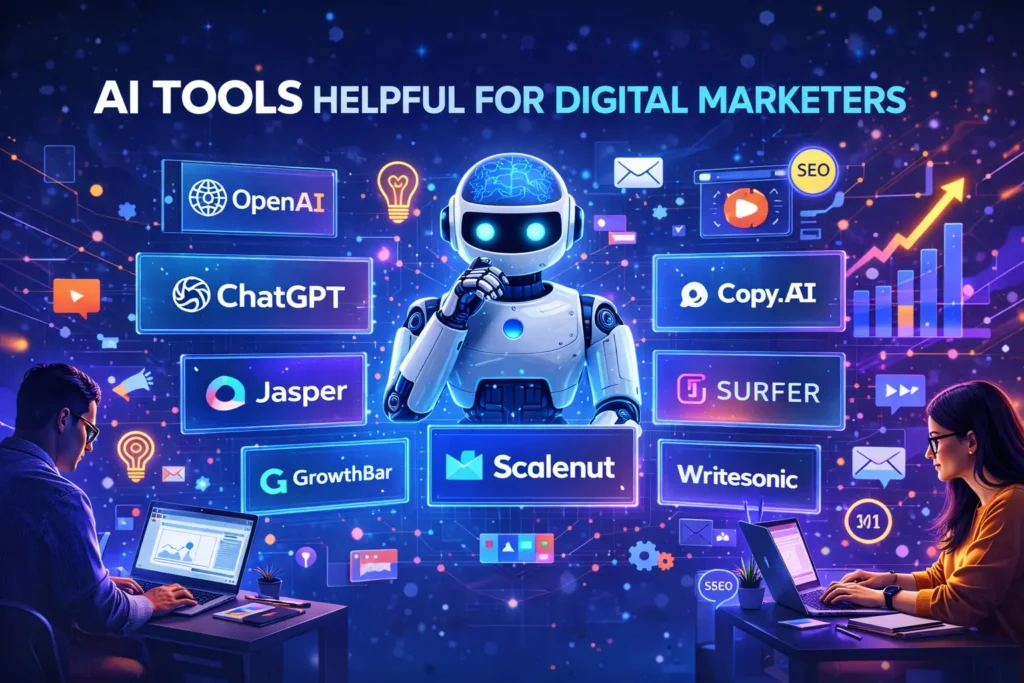
ChatGPT / Claude — Content Creation — AI writing and ideation https://www.semrush.com/home/ semrush — SEO — Keyword research and competitive analysis Jasper — Content Marketing — AI copywriting at scale HubSpot https://www.hubspot.com/ AI — CRM and Automation — Lead scoring and email automation Drift — Chatbots — Conversational AI for lead generation Albert.ai — Paid Advertising — Fully autonomous AI ad campaigns Midjourney / DALL·E — Visual Content — AI image generation Salesforce Einstein — Predictive Analytics — AI-powered CRM insights Hootsuite Insights — Social Media — AI social listening and scheduling Persado — Personalization — AI language optimization for conversions
4. Benefits of AI in Digital Marketing
Increased Efficiency — Automate repetitive tasks and free up human talent for creative work. Cost Reduction — Optimize ad spend and reduce wasted marketing budget. Better Customer Insights — Deep data analysis reveals patterns invisible to the human eye. Higher Conversion Rates — Personalized experiences convert significantly better than generic ones. Scalability — AI allows small teams to execute enterprise-level marketing campaigns. Real-Time Decision Making — Instant data processing enables on-the-fly campaign adjustments. Improved Customer Experience — Faster responses, personalized journeys, and smarter recommendations. Competitive Advantage — Brands using AI outperform competitors still relying on manual methods.
5. Challenges of Adopting AI in Digital Marketing
Data Privacy Concerns — AI requires large volumes of data, raising GDPR and CCPA compliance issues. High Implementation Costs — Enterprise-grade AI tools can be expensive for small businesses. Skill Gap — Marketers need upskilling to work effectively with AI tools. Over-reliance on Automation — Without human oversight, AI campaigns can miss brand nuance. Algorithm Bias — AI models trained on biased data can produce discriminatory outcomes. Lack of Creativity — AI excels at optimization but still lacks genuine human creativity. Integration Complexity — Connecting AI tools with existing marketing stacks can be technically complex.
6. How to Integrate AI into Your Digital Marketing Strategy
Step 1 — Audit Your Current Marketing Stack. Identify where time and resources are being wasted. Step 2 — Define Clear Goals. Define measurable KPIs around lead generation, conversions, or ad spend. Step 3 — Start with One AI Tool. Begin with a single AI-powered tool that addresses your biggest pain point. Step 4 — Train Your Team. Invest in training so your marketing team can work effectively alongside AI. Step 5 — Test, Measure, and Optimize. Use AI analytics to continuously measure performance and refine your strategy. Step 6 — Scale Gradually. Once you’ve proven ROI in one area, gradually expand AI adoptio
FAQ’S
Q1. How is AI changing digital marketing today?
AI is changing digital marketing today by automating repetitive tasks, enabling hyper-personalization, improving data analytics, powering chatbots, optimizing ad campaigns through programmatic advertising, and enhancing content creation. It allows marketers to work smarter, reach the right audiences, and deliver better ROI.
Q2. What are the best AI tools for digital marketing?
Some of the best AI tools for digital marketing include ChatGPT and Claude for content creation, Semrush and Ahrefs for AI-powered SEO, HubSpot and Salesforce Einstein for CRM and analytics, Drift and Tidio for AI chatbots, Jasper for copywriting, and Google Performance Max for AI-driven advertising.
Q3. Will AI replace digital marketers?
No, AI will not replace digital marketers — it will augment them. AI handles data processing, automation, and optimization, while human marketers provide creativity, strategy, empathy, and ethical judgment. The future belongs to marketers who know how to collaborate effectively with AI.`
Q4. How does AI improve SEO?
AI improves SEO by enabling smarter keyword research, analyzing search intent, optimizing content for relevance and readability, automating technical SEO audits, predicting algorithm changes, and improving voice search optimization.
Q5. What is predictive analytics in digital marketing?
Predictive analytics in digital marketing is the use of AI and machine learning to forecast future consumer behavior based on historical data. It helps marketers identify which leads are most likely to convert, predict churn, optimize email send times, and allocate marketing budgets more efficiently.
There is no longer any doubt about how AI is changing digital marketing today — it is changing everything. From content creation and SEO to paid advertising, social media, email marketing, and customer engagement, artificial intelligence is rewriting the rules of the game.
Brands that embrace AI-powered marketing strategies will enjoy faster growth, better customer relationships, lower costs, and a decisive competitive advantage. Those that resist risk being left behind in an increasingly intelligent digital marketplace.
The key to success lies not in replacing human marketers with machines, but in empowering creative, strategic marketers with the intelligence and efficiency of AI. The best marketing outcomes in 2025 and beyond will come from the perfect blend of human creativity and artificial intelligence.
So whether you are just beginning to explore AI marketing tools or looking to scale your existing AI strategy, the time to act is now. The future of digital marketing is intelligent, automated, and deeply personal — and AI is leading the way