Have you ever wondered why Amazon somehow knows exactly what you might buy next? Or why you sit down to watch one episode on Netflix and end up finishing an entire season?
That’s not luck.
These companies understand human psychology better than most businesses. The psychological triggers used by Amazon and Netflix are carefully designed to influence our decisions, increase engagement, and create habits that keep us coming back.
The good news? You don’t need a billion-dollar budget to apply these principles to your own website or business.
Let’s look at seven powerful psychological triggers and how you can use them ethically.
Table of Contents
1. Social Proof
People naturally trust what others trust.
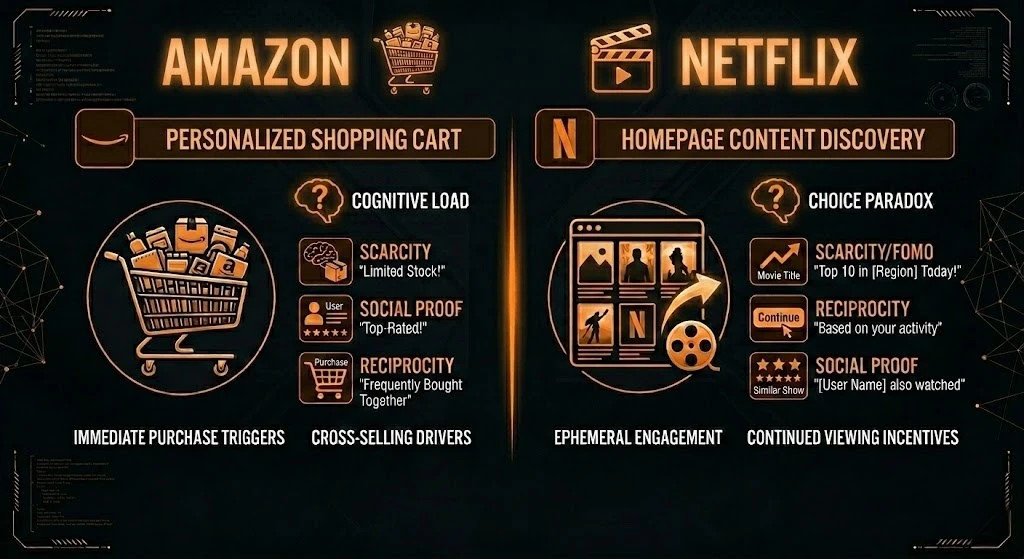
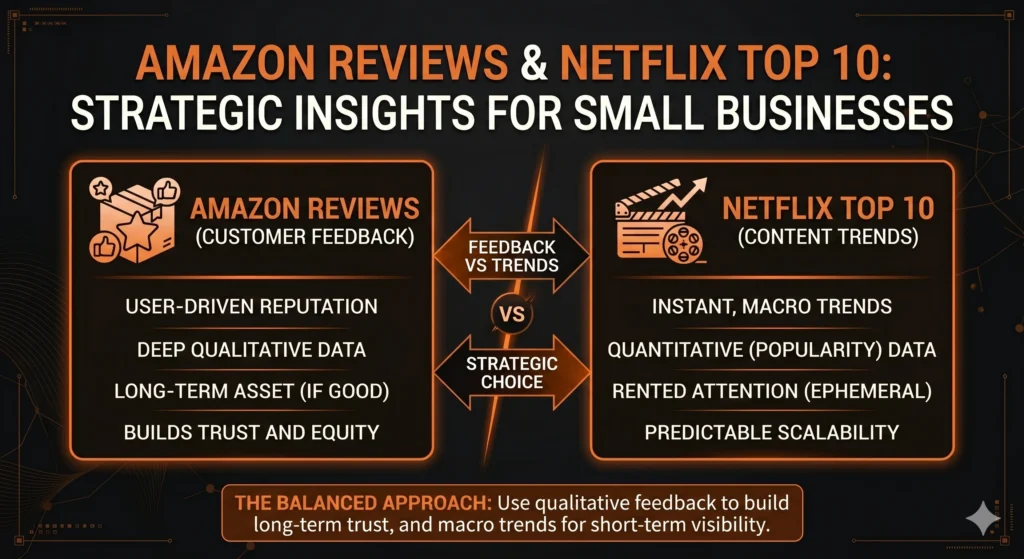
Amazon shows product ratings, reviews, “Best Seller” badges, and customer photos. Netflix highlights trending shows and Top 10 lists.
These signals reassure people that they’re making the right decision.
How You Can Use It
- Customer testimonials
- Reviews
- Case studies
- Trust badges
- User-generated content
People often buy confidence before they buy products.
2. Personalization
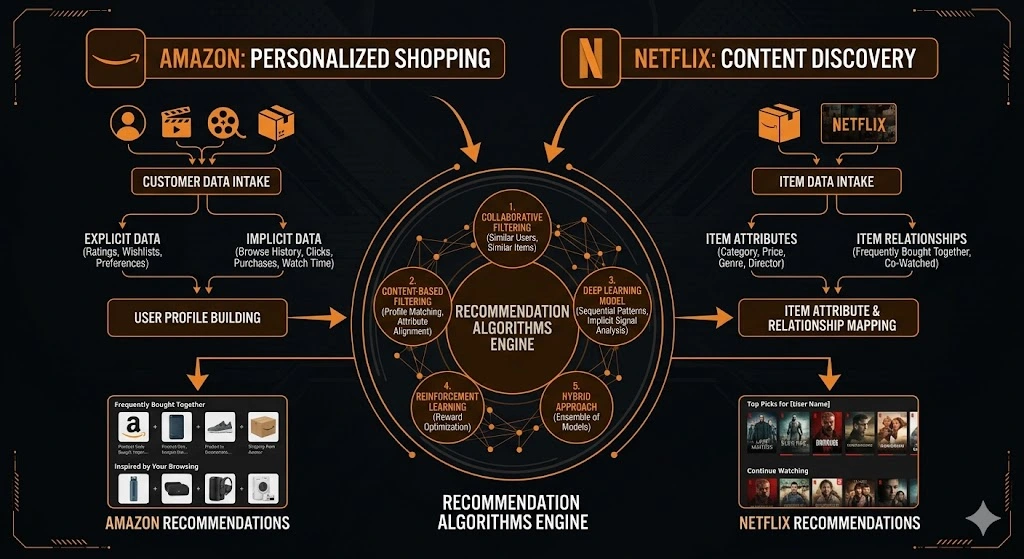
Amazon recommends products based on browsing history.
Netflix recommends movies and shows based on viewing behavior.
This creates the feeling that the platform understands you personally.
How You Can Use It
- Personalized email campaigns
- Product recommendations
- Dynamic website content
- AI chatbots
Consumers respond better when marketing feels relevant rather than generic.
How AI is changing digital marketing
3. Scarcity
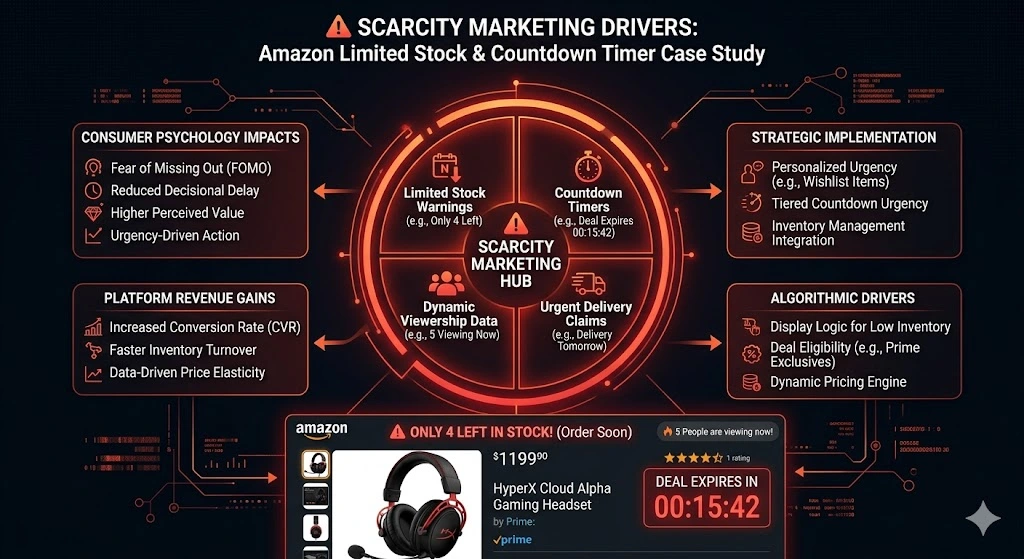
Amazon frequently displays:
- “Only 3 left in stock”
- “Limited-time deal”
These messages create urgency.
Scarcity works because people hate missing opportunities more than they enjoy gaining something new.
Use It Carefully
False urgency destroys trust.
Real scarcity works best.
4. Instant Gratification
Netflix automatically starts the next episode.
Amazon offers one-click ordering and same-day delivery.
Removing friction makes decisions easier.
Apply This Principle
- Reduce form fields
- Simplify checkout
- Improve page speed
- Offer quick responses
Convenience increases conversions.
5. The Power of Habits
Netflix sends notifications about new releases.
Amazon reminds customers about products left in their cart.
These actions encourage repeated behavior.
Build Habits With
- Email newsletters
- Push notifications
- Loyalty programs
- Content publishing schedules
Consistency creates familiarity, and familiarity creates trust.
6. Choice Architecture
Too many options overwhelm people.
Amazon solves this with categories, filters, and recommendations.
Netflix organizes content into collections and genres.
They don’t remove options—they organize them.
Apply This To Your Website
- Simplify navigation
- Use clear CTAs
- Avoid clutter
- Highlight your primary offer
Confused visitors rarely become customers.
7 conversion killers on website
7. FOMO (Fear of Missing Out)
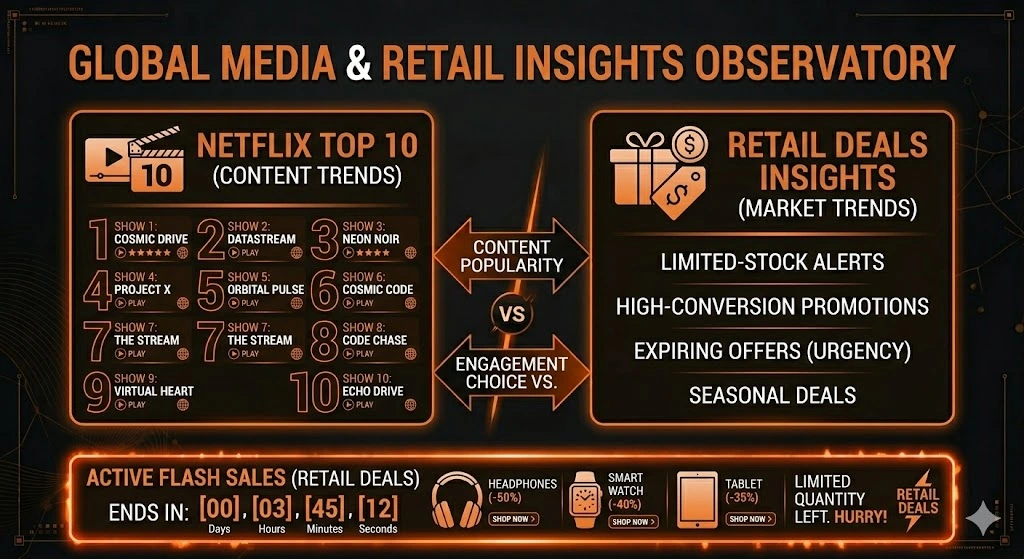
Top 10 lists on Netflix and flash sales on Amazon create curiosity and urgency.
People want to participate in what others are experiencing.
Examples
- Limited offers
- Countdown timers
- Trending content
- Seasonal promotions
Used ethically, FOMO motivates action.
What Small Businesses Can Learn
You don’t need to copy Amazon or Netflix.
Instead, understand why their systems work.
Human psychology hasn’t changed.
People still seek:
- Trust
- Convenience
- Simplicity
- Personalization
- Validation
Businesses that understand these needs create better experiences and stronger customer relationships.
Final Thoughts
The psychological triggers used by Amazon and Netflix aren’t about manipulation. They’re about understanding how people make decisions.
Whether you’re building a website, running ads, or creating content, these principles can help you create experiences that feel easier, more enjoyable, and more trustworthy.
Technology changes constantly, but human behavior remains surprisingly consistent.
The businesses that understand psychology often win—not because they have bigger budgets, but because they understand people better.
Importance of SEO for your business
FAQ’S
What psychological triggers does Amazon use?
Amazon uses social proof, scarcity, personalization, convenience, and FOMO to influence purchasing decisions and improve customer experience.
Why is Netflix so addictive?
Netflix uses autoplay, personalization, recommendations, and habit-forming design to keep viewers engaged.
Can small businesses use these psychological triggers?
Yes. Small businesses can use social proof, trust signals, personalization, and simplified user experiences to improve conversions and customer engagement.