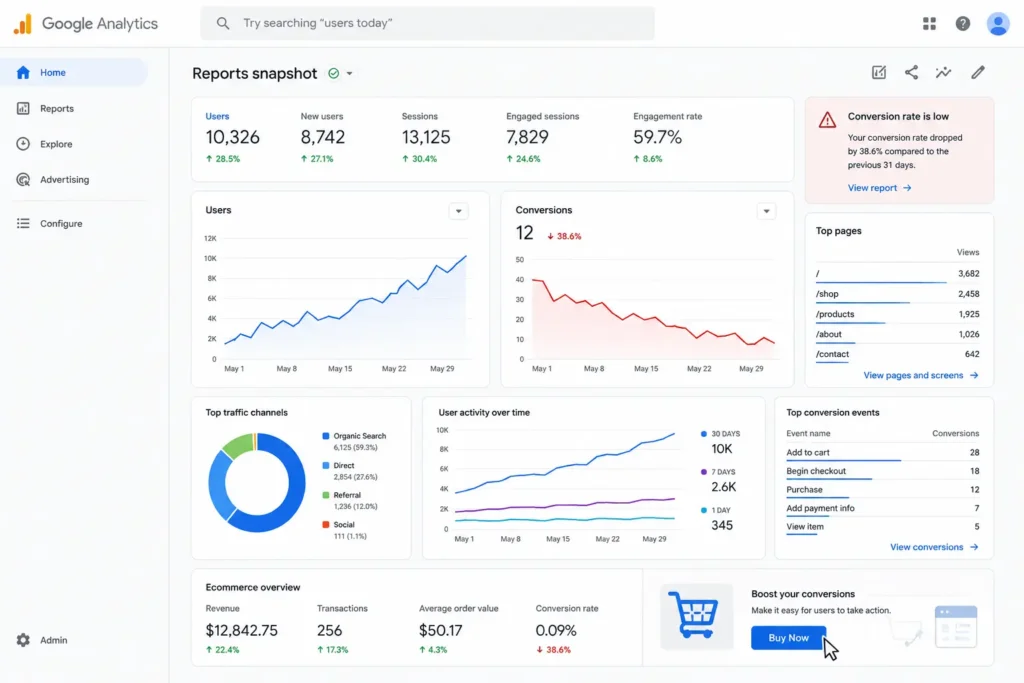
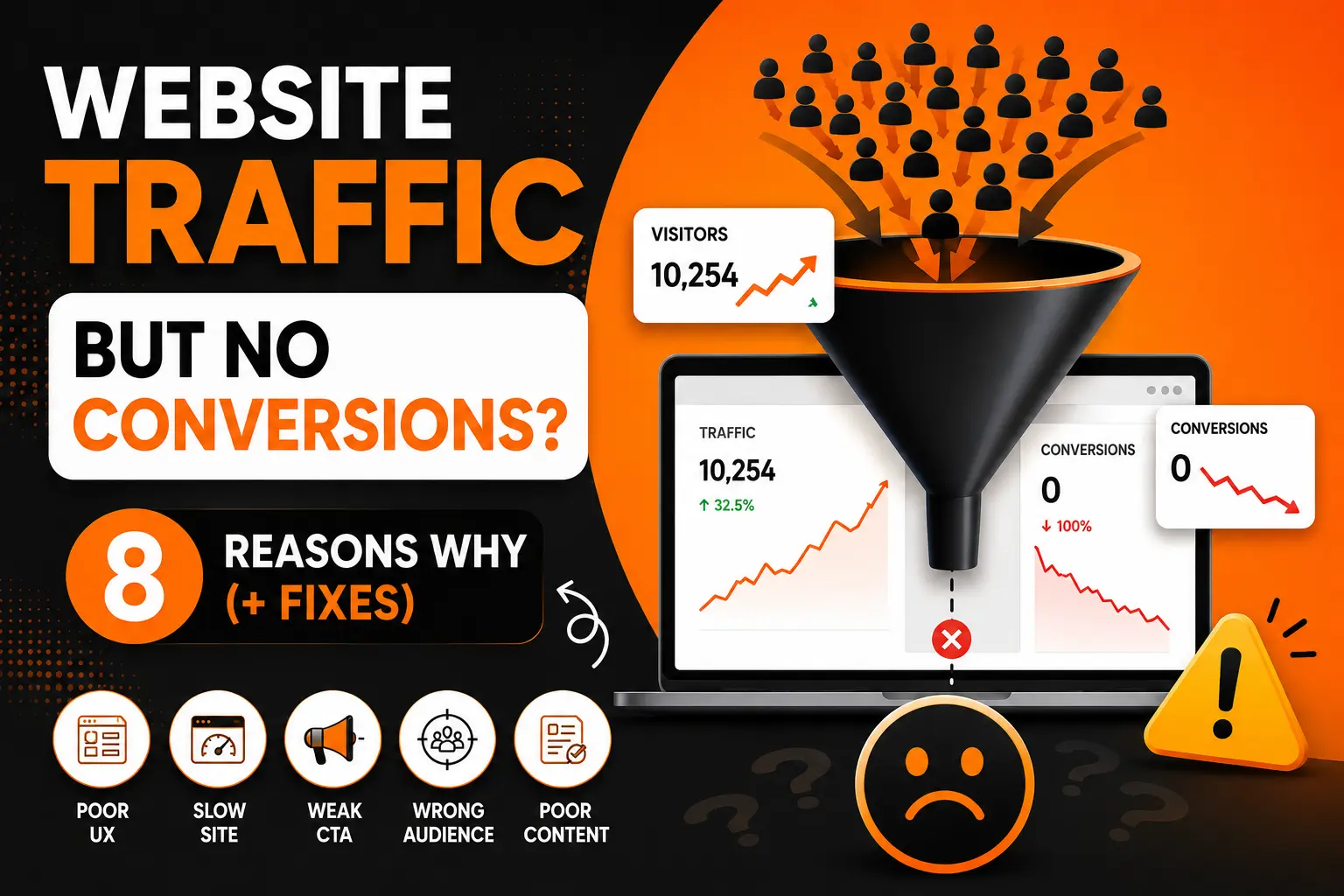
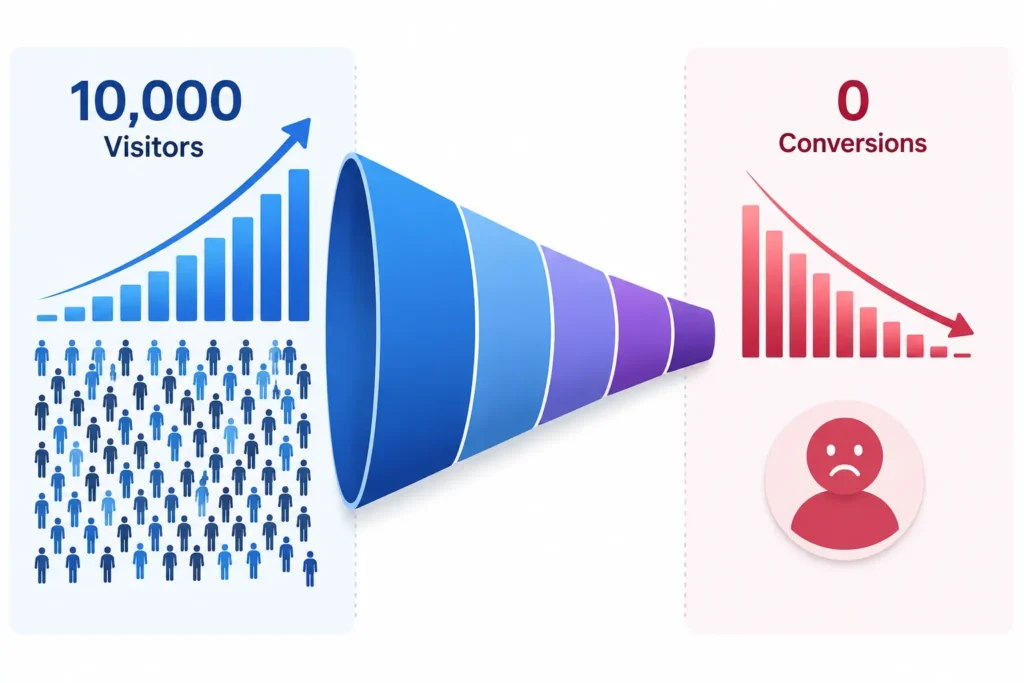
Website traffic but no conversions is one of the most frustrating problems businesses face
You publish blogs, improve SEO, run ads, post on social media, and slowly start seeing visitors arrive on your website. Analytics begin showing movement. Impressions increase. Sometimes even clicks start coming consistently.
But then comes the frustrating part.
Nobody contacts you.
Nobody fills out the form.
Nobody books a call.
And despite getting traffic, your business still feels stuck.
This is one of the most common problems businesses face online today.
Many websites are built to attract attention but not designed to convert that attention into action. The focus stays on rankings, visitors, and impressions while the actual user experience gets ignored.
Table of Contents
The truth is simple:
Traffic alone does not grow a business. Conversions do.
A website should not only bring people in. It should guide them, build trust, answer questions, and make taking action feel natural.
In many cases, businesses don’t actually have a traffic problem. They have a conversion problem.
A website may look modern, rank for keywords, or receive decent traffic, but small structural mistakes silently reduce engagement and push visitors away before they ever become leads or customers.
This article explores the most common reasons websites fail to convert traffic into real business growth and what can actually be done to improve the situation.
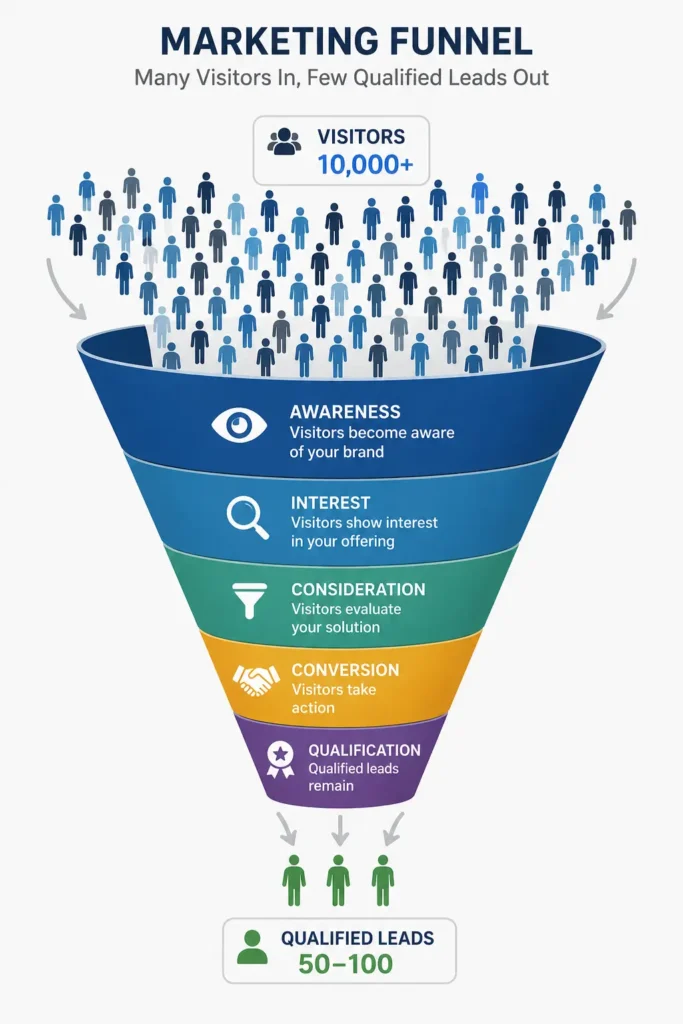
What Is a Website Conversion?
Before discussing the problems, it’s important to understand what a conversion actually means.
A conversion happens when a visitor takes a meaningful action on your website.
That action could be:
- filling out a contact form,
- booking a consultation,
- subscribing to a newsletter,
- making a purchase,
- downloading a resource,
- or even spending more time engaging with your content.
Different businesses measure conversions differently, but the goal remains the same:
Turning visitors into meaningful business opportunities.
This is why focusing only on traffic numbers can be misleading. A website receiving 500 highly targeted visitors may perform better than a website receiving 10,000 untargeted clicks.
Quality and intent matter more than raw numbers.
Why Website Traffic But No Conversions Happens
Many businesses do not realize their website has conversion issues until months later.
Some common warning signs include:
High Traffic but Very Few Leads
This is the clearest indicator.
If people are visiting your website but nobody is taking action, something inside the user journey is creating friction.
Visitors Leave Quickly
When users leave within seconds, it often means:
- the website feels confusing,
- the content does not match their expectations,
- or the page experience feels weak.
Mobile Users Don’t Engage
Sometimes websites perform reasonably on desktop but struggle badly on mobile devices.
Considering most traffic today comes from mobile users, poor mobile experience can silently destroy conversions.
Call-to-Actions Get Ignored
If users scroll through your website without clicking buttons or submitting forms, your CTAs may not be clear or persuasive enough.
Good Rankings but Weak Business Results
This is extremely common.
Many websites focus heavily on SEO rankings while ignoring what happens after users land on the page.
Getting found online is important, but convincing users to take action is equally important.
1. Your Website Looks Good but Isn’t Built for Conversions
Modern websites often prioritize appearance over clarity.
Animations, visuals, trendy layouts, and fancy effects may look impressive initially, but they do not automatically improve conversions.
Many businesses unknowingly create websites that look visually polished but fail to answer simple user questions:
- What exactly does this business offer?
- Why should I trust them?
- What should I do next?
- How can this help me?
When users feel uncertain, they hesitate.
And hesitation usually leads to exits.
A conversion-focused website is structured intentionally. Every section should move the visitor closer toward understanding:
- the problem,
- the solution,
- and the next action.
Clear messaging matters more than decorative complexity.
Simple improvements often create major differences:
- stronger headlines,
- cleaner structure,
- better spacing,
- strategic call-to-actions,
- and more focused content hierarchy.
Businesses often underestimate how much clarity impacts conversions.
Users should never feel forced to “figure out” the website on their own.
2. Slow Website Speed Pushes Visitors Away
Website speed affects far more than people realize.
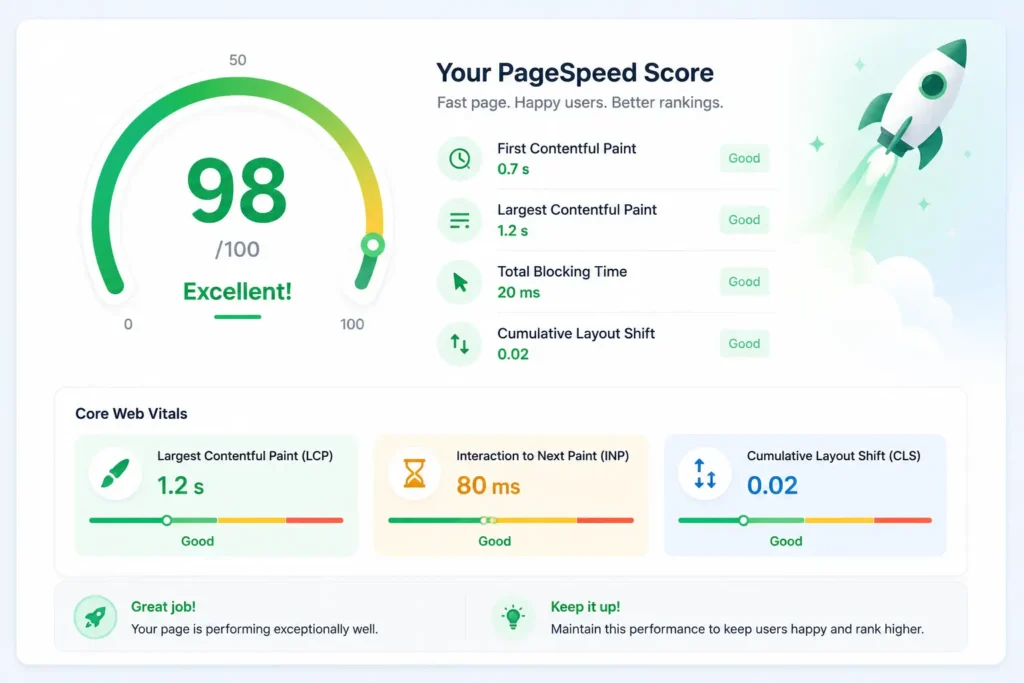
A slow-loading website creates frustration instantly. Most users are unwilling to wait several seconds for pages to fully load, especially on mobile devices.
Even a visually impressive website can fail if performance feels sluggish.
Common causes of slow websites include:
- oversized images,
- excessive animations,
- poor mobile optimization,
- too many plugins,
- unoptimized scripts,
- and bloated page builders.
Performance issues impact:
- user experience,
- bounce rates,
- SEO visibility,
- and conversion rates simultaneously.
The challenge is finding balance.
Some businesses obsess over PageSpeed scores and strip away all visual quality. Others completely ignore optimization and overload their pages with effects.
The best websites maintain both:
- strong visual experience,
- and reasonable performance.
Users don’t expect perfection. But they do expect responsiveness.
If a website feels slow or unstable, trust decreases immediately.
Use Google PageSpeed Insights to analyze your website performance.
3. Weak Call-to-Actions Confuse Visitors
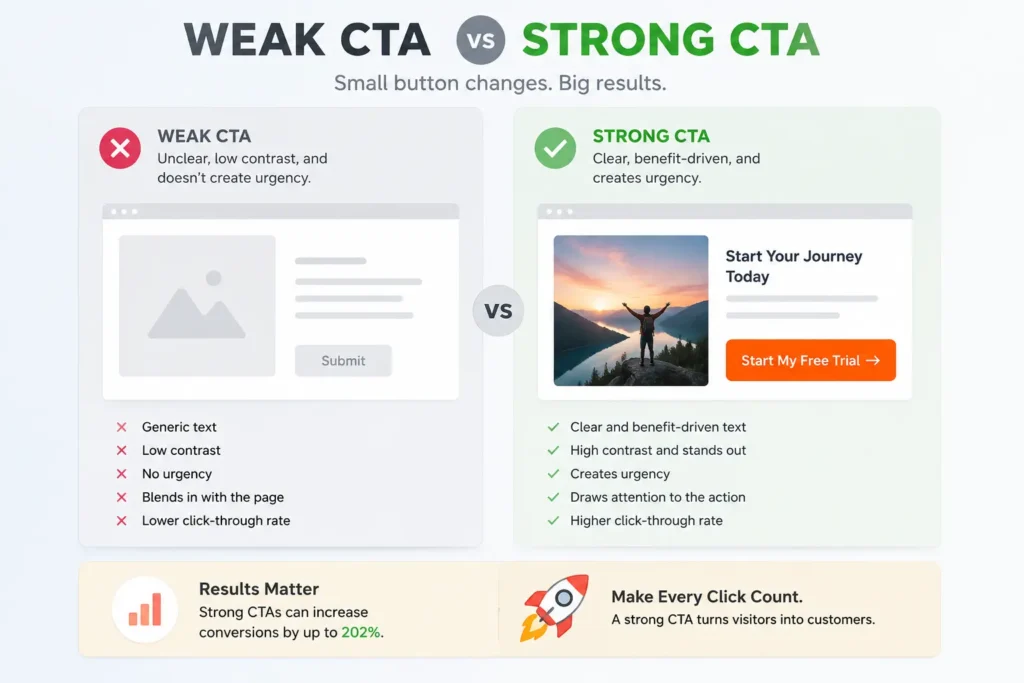
Many websites expect users to know exactly what to do next.
Many businesses struggle with website traffic but no conversions because their call-to-action is weak.
Unfortunately, most users need guidance.
A weak or unclear call-to-action creates uncertainty.
Buttons like:
- “Learn More”
- “Click Here”
- “Explore”
often fail because they communicate no real value.
Strong CTAs are clear and intentional.
Instead of vague actions, users respond better to direct messaging:
- Get a Free Consultation
- Improve Your Website Performance
- Start Growing Your Business
- Book Your Free Strategy Call
Good call-to-actions also appear naturally throughout the page instead of being hidden only at the bottom.
Visitors should never have to search for the next step.
At the same time, websites should avoid becoming overly aggressive. Too many popups, excessive buttons, or constant interruptions create frustration instead of conversions.
The goal is guidance, not pressure.
4. Your Website Doesn’t Build Enough Trust
Trust is one of the biggest factors influencing online decisions.
People hesitate to contact businesses that feel inconsistent, unclear, or unprofessional.
Sometimes websites fail to convert not because the service is weak, but because the presentation creates uncertainty.
Trust issues often come from:
- inconsistent branding,
- poor readability,
- outdated layouts,
- weak messaging,
- lack of authority content,
- or cluttered design.
Even small details influence perception:
- spacing,
- typography,
- responsiveness,
- color consistency,
- and content quality.
Users judge websites quickly.
A professional-looking website creates confidence before users even begin reading deeply.
Businesses can strengthen trust by:
- publishing useful blog content,
- maintaining consistent branding,
- improving readability,
- showcasing expertise,
- and simplifying the user journey.
Trust is rarely built through one element alone. It comes from the overall experience feeling reliable and intentional.
Track visitor behavior using Google Search Console.
5. Poor Mobile Experience Is Silently Hurting Conversions
Many websites are designed primarily for desktop screens and only adjusted later for mobile responsiveness.
This creates problems like:
- oversized sections,
- broken spacing,
- tiny text,
- difficult navigation,
- or poorly aligned buttons.
Since mobile users now dominate online traffic, weak mobile experience directly impacts conversions.
A website may look excellent on desktop while performing terribly on phones.
Mobile optimization is no longer optional.
Good mobile experience should prioritize:
- readability,
- spacing,
- smooth scrolling,
- clean layouts,
- and fast interaction.
Users should not need to zoom, struggle with menus, or search excessively for information.
Businesses often lose conversions simply because mobile browsing feels frustrating.
6. You’re Attracting the Wrong Audience
Not all traffic is valuable.
If you’re experiencing website traffic but no conversions, your audience targeting may be wrong
A website can receive large amounts of visitors while still generating poor business results because the traffic itself lacks intent.
This usually happens because of:
- weak keyword targeting,
- broad advertising campaigns,
- irrelevant content,
- or unclear positioning.
For example:
A business selling premium services may accidentally attract users searching only for free information.
The traffic increases, but conversions remain weak because the audience was never properly aligned with the offer.
The same issue happens in paid advertising.
Broad targeting may generate clicks without attracting genuinely interested users.
This is why successful SEO and marketing strategies focus heavily on user intent.
The goal is not simply attracting visitors.
The goal is attracting the right visitors.
Targeted traffic almost always converts better than large amounts of irrelevant traffic.
7. SEO Alone Cannot Fix a Poor Website Experience
SEO is important. But SEO alone is not enough.
Many businesses assume rankings automatically solve conversion problems.
They don’t.
SEO helps users discover your website. But once users arrive, the website itself must do the rest.
A website that ranks well but creates poor user experience will still struggle to generate meaningful results.
Modern digital growth requires a balance between:
- SEO,
- branding,
- content strategy,
- user experience,
- and conversion optimization.
Google itself increasingly prioritizes user experience because search engines want to recommend websites that genuinely help users.
This is why websites focusing only on keywords while ignoring usability often struggle to convert traffic effectively.
Good rankings bring opportunities.
Good user experience turns those opportunities into results.
Practical Ways to Improve Website Conversions
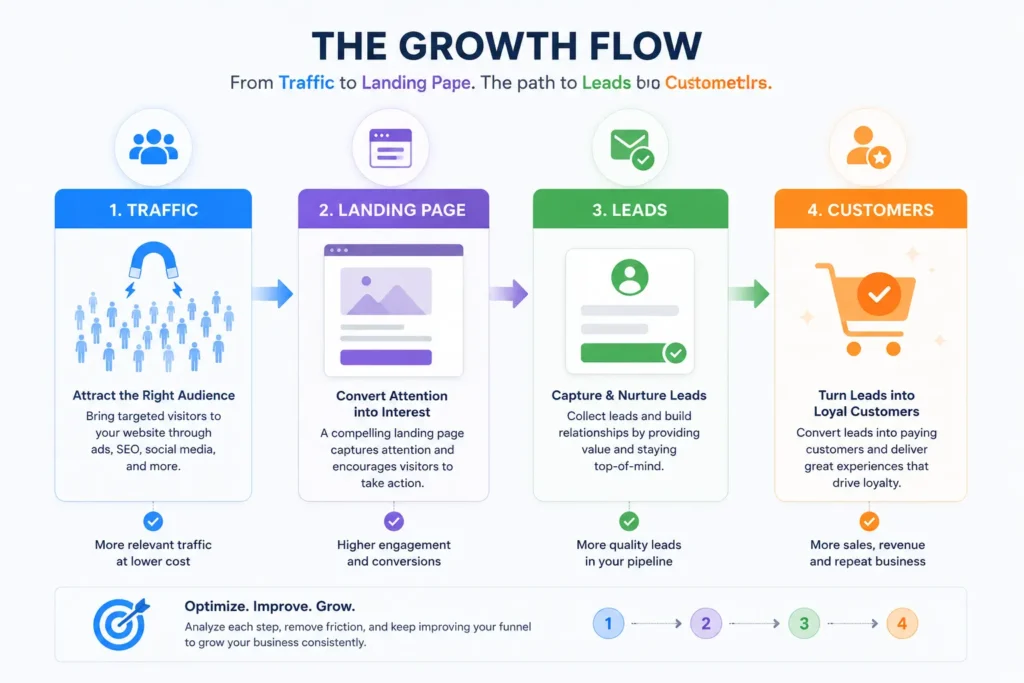
Improving conversions does not always require a complete redesign.
Small strategic improvements often create meaningful results over time.
Improve Website Clarity
Users should understand:
- what you offer,
- who it is for,
- and what to do next
within seconds of landing on the page.
Clear communication reduces hesitation.
Strengthen Your Call-to-Actions
Use direct and meaningful CTAs instead of generic phrases.
Guide users intentionally throughout the website.
Optimize Mobile Experience
Always test:
- spacing,
- readability,
- button placement,
- and navigation
on mobile devices.
Small mobile frustrations can dramatically reduce conversions.
Improve Loading Speed
Compress images, optimize scripts, and avoid unnecessary heavy effects that slow down the experience.
Build Trust Through Content
Educational blog content helps businesses establish authority over time.
Users trust brands that consistently provide value.
Match User Intent
Ensure your:
- content,
- SEO,
- and advertising
all align with the type of audience you actually want to attract.
Real Example: Why Traffic Alone Failed to Generate Leads
A common situation many businesses experience looks something like this:
A website starts gaining traffic through SEO and social media. Analytics appear encouraging, but inquiries remain extremely low.
After reviewing the website, the problems become obvious:
- weak call-to-actions,
- unclear messaging,
- slow mobile experience,
- poor content structure,
- and lack of trust signals.
The traffic itself was not the issue.
Users simply did not feel guided or confident enough to take action.
After improving:
- mobile responsiveness,
- CTA placement,
- page clarity,
- and website structure,
engagement improved significantly.
This happens more often than people realize.
In many cases, conversion problems are caused by small friction points accumulating across the user experience.
FAQ’s
Why is my website getting traffic but no sales?
This usually happens because of weak user experience, poor targeting, unclear messaging, or lack of trust-building elements on the website.
Does website design affect conversions?
Yes. Design strongly impacts trust, readability, navigation, and overall user experience, all of which influence conversions
Can SEO improve website conversions?
SEO helps attract targeted traffic, but conversions improve when SEO is combined with strong website structure and user experience
Why do visitors leave websites quickly?
Visitors often leave because of slow speed, confusing layouts, weak messaging, or poor mobile optimization.
Is mobile optimization important for conversions?
Absolutely. Most users browse on mobile devices today, so poor mobile experience can significantly reduce engagement and lead generation.
Final Thoughts
Getting traffic without conversions can feel frustrating, especially when time and effort are already being invested into growing a website.
But in many cases, the issue is not visibility.
The problem usually lies in:
- user experience,
- messaging,
- trust,
- targeting,
- or website structure.
The good news is that these problems are fixable.
A high-performing website is not built only for rankings. It is built for people.
When SEO, design, content, and user experience work together, websites stop becoming passive online brochures and start becoming real business assets.
Because traffic alone means very little if it never turns into meaningful action